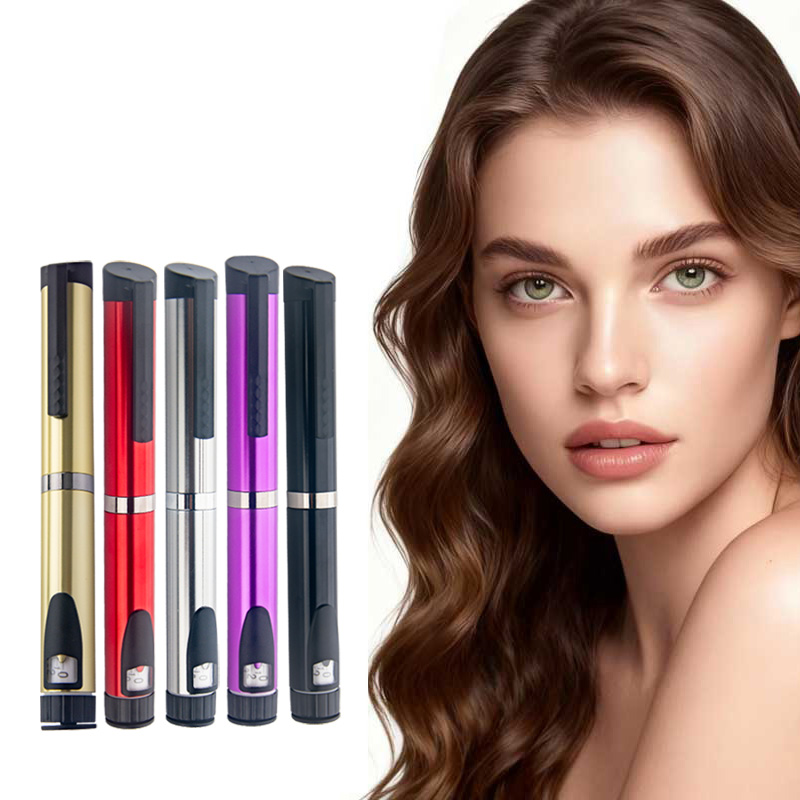
When bringing a multi-dose therapeutic or biosimilar to global markets, pharmaceutical packaging engineers face a complex balancing act: mechanical precision versus industrial scalability. Device failure rates at the sub-millimeter level can compromise dosing uniformity, trigger regulatory recalls, and erode profit margins.
The V3 Drug Delivery Architecture was engineered from the chassis up to solve structural fatigue and scale limitations, offering pharmaceutical brands a robust, low-maintenance mechanical platform.
Precision Engineering: Internal Mechanism Breakdown
Unlike standard commercial pens that depend on single-point plastic catches, the V3 platform utilizes a dual-channel guide rail and reinforced drive sleeve:
Low-Friction Internal Drive Screw: Molded from polyoxymethylene (POM) with high self-lubricating characteristics, maintaining uniform mechanical friction through thousands of rotations without chemical lubricants.
Torsion-Balanced Spring Storage: The assist-spring is housed in an isolated sub-chamber, preventing lateral torsional stress on the primary glass cartridge during actuation.
Micro-Tolerance Tooling Standards: Core moving components are held to strict manufacturing tolerances within $\pm 0.02\text{ mm}$, preventing drive slip, missed pitch notches, or dosage drifting over time.
Cold-Chain Mechanical Resilience: Engineered and batch-tested to operate consistently from 2°C to 8°C cold storage through to 25°C ambient delivery without material embrittlement or torque fluctuation.
Technical Engineering Parameters
| Mechanical Vector | V3 Engineering Benchmark | Testing Standard Reference |
| Plunger Advance Deviation | $< 1.2\%$ across entire 3.0 ml travel | ISO 11608-1 Section 8 |
| Drop Shock Integrity | Functional after 1.0 m free-fall to steel surface | ISO 11608-1 Drop Integrity |
| Dialing Torque Profile | Constant $0.06 - 0.09\text{ Nm}$ across full stroke | Automated Torque Gauging |
| Thermal Cycling Range | $-20\text{°C}$ storage up to $+55\text{°C}$ transport | ASTM D4169 Environmental Test |
| Cleanroom Class | Grade C / Class 100,000 ISO 14644-1 | Automated Injection & Assembly |
Total Cost of Ownership (TCO): The Reusable vs. Disposable Economic Model
For high-volume generic manufacturers and emerging biotech brands, the V3 platform significantly optimizes unit economics across the supply chain:
Reduced Logistics & Cold-Chain Bulk: Shipping pre-assembled, fully disposable devices increases cold-chain volumetric footprint by up to 300%. The V3 reusable delivery body decouples device shipping from temperature-controlled 3.0ml drug cartridge logistics.
Accelerated Tooling & Validation Timelines: Custom mold creation can delay drug launches by 18 to 24 months. Utilizing the validated V3 core drive mechanism cuts device verification cycles down to a fraction of the traditional timeline.
Optimized Secondary Packaging Footprint: A single V3 device paired with multi-pack replacement cartridges lowers packaging raw material consumption and shelf storage footprint for retail pharmacies.
Quality System & Regulatory Filing Support
Global distribution demands uncompromised documentation. We support pharmaceutical sponsors with audit-ready engineering datasets:
Design History File (DHF) Modules: Documented traceability covering user requirements, risk analyses (ISO 14971), and functional verification matrices.
Biocompatibility Data: Complete ISO 10993 testing dossiers confirming zero extractables or toxic leachables in skin-contact zones.
Automated 100% In-Line Inspection: Vision inspection systems verify gear pitch counts, optical clarity, and force curves on every assembly line before batch release.
Frequently Asked Questions (FAQ)
Q: How does the V3 mechanism perform under repeated freezing and thawing cycles?
A: The medical polymers and mechanical springs are selected to maintain tensile strength and elasticity through repeated thermal shifts between cold storage and patient use environments.
Q: Can the internal drive pitch be adapted to deliver custom non-standard volume increments?
A: Yes. While the housing and ergonomic interface remain standardized, the lead screw's internal pitch can be tailored for proprietary dose volumes.